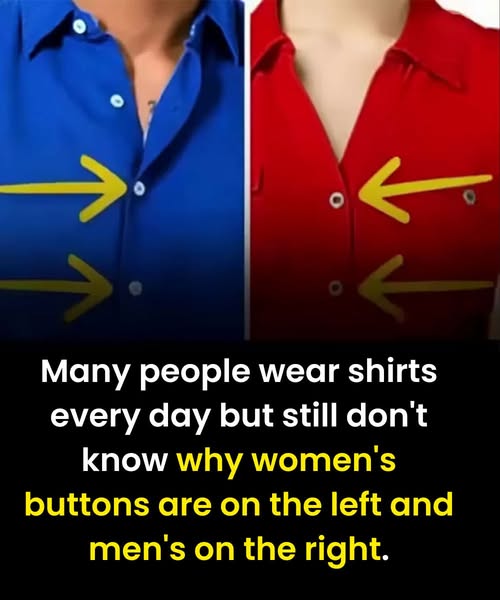
What started as a simple matter of convenience for the wealthy eventually grew into one of the most quietly persistent social codes in modern fashion—one we still wear every single day without ever questioning it. In the households of Europe’s upper class, clothing wasn’t just fabric; it was a symbol of structure, hierarchy, and ritual. Women of status rarely dressed themselves. Their gowns were elaborate, layered, and often impossible to fasten alone. Right-handed maids stood before them each morning, buttoning garments from their right side. Placing women’s buttons on the left made the process smoother, quicker, and more efficient for the person doing the dressing—not the person being dressed.
Men’s button placement evolved from a very different need. Unlike the decorative, restrictive clothing women were expected to wear, men’s attire was designed with movement and self-sufficiency in mind. Many carried swords or firearms, tools that demanded immediate access with the dominant hand. Having buttons on the right meant a man could open his coat quickly if he needed to reach a weapon—or simply dress himself without assistance. Over time, these two practical solutions hardened into visual codes: one side associated with autonomy and preparedness, the other with dependence and ornamentation.
As decades passed, fashion changed, but the asymmetry stayed. Even when servants and weapons faded from everyday life, the symbolism remained stitched into the seams. The rise of industrialization could have wiped the slate clean. Factories could have chosen symmetrical patterns, neutral fastenings, or a universal design for men and women alike. Instead, mass production carved these old distinctions into global standards. What had once been a reflection of social structure became tradition—subtle, unexamined, and unquestioned.
By the 20th century, the divide was so normalized that it rarely crossed anyone’s mind. A blouse buttoning left signaled “feminine,” whether anyone understood why. A shirt buttoning right signaled “masculine,” long after men stopped carrying swords and women stopped relying on attendants. The logic had vanished, but the pattern survived, preserved not because it made sense but because generations kept repeating it.
Even today, when most people dress themselves without thinking and gender norms evolve rapidly, that hidden history lingers in our closets. The everyday act of buttoning a shirt becomes a silent ritual passed down from eras of rigid hierarchy—an echo of maids working in dimly lit chambers and soldiers preparing for conflict. It’s astonishing how something so small, so mundane, can carry the weight of centuries.
Next time your fingers instinctively reach for a row of buttons, pause for a moment. You’re not just closing a shirt. You’re touching a fragment of human history: a story about power, gender, class, tradition, and the invisible ways the past continues to shape the present. These tiny details, frozen in design, remind us that culture is often preserved not through conscious choice, but through habit—and that sometimes the smallest things on our clothing speak the loudest about the world that created them.